Across Europe with the 2nd Armored Division: John J. Arnone’s War
by Aidan Sigmund
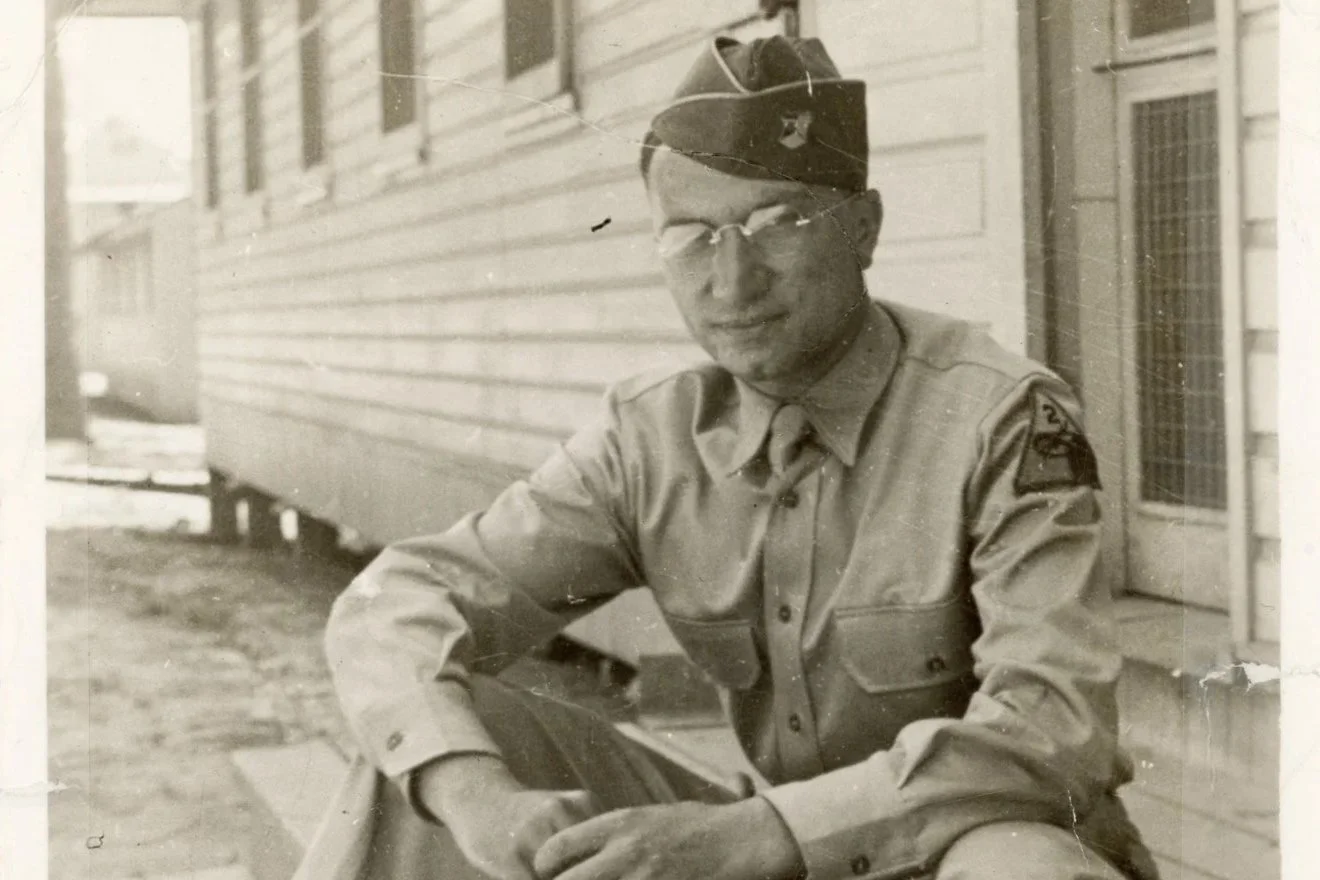
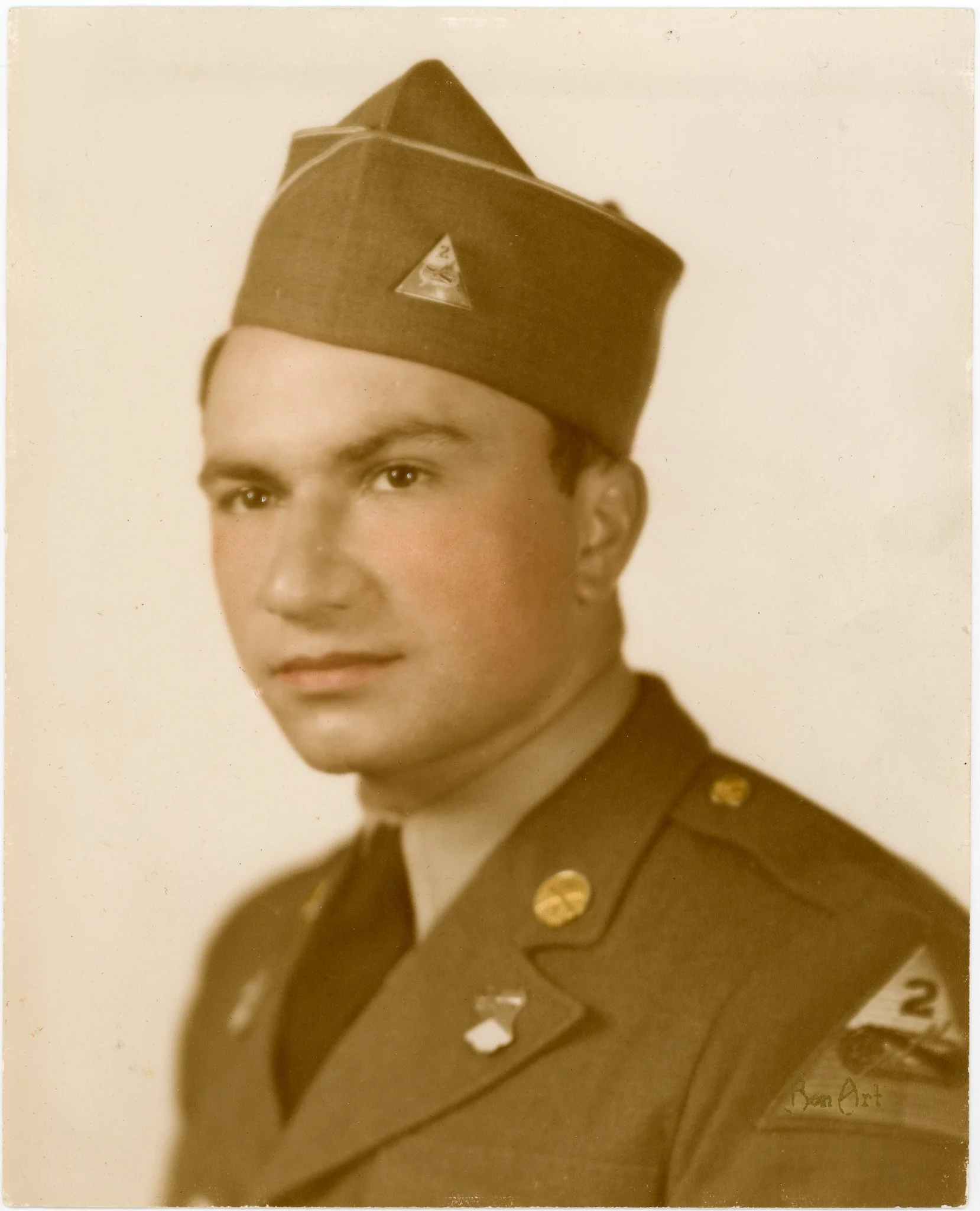
The WWII Veterans History Project recently acquired a collection of artifacts from the daughter of Sergeant John J. Arnone, who served in H Company, 66th Armored Regiment, 2nd Armored Division. The collection includes his original dog tags, Purple Heart medal, wartime photographs, and other poignant items from his service in the European Theater of Operations.
John J. Arnone was born on January 2, 1919, in Jersey City, New Jersey, to Michael and Rosa Arnone, both Italian immigrants who had come to the United States as children. After graduating from Dickinson High School in 1936, Arnone went to work for the American Can Company, where he was employed as a wire stitcher helping to manufacture milk cartons.
However, as the war in Europe raged on, it seemed to be inevitable that the United States would soon be involved. That fear became a reality for the Arnone family when John became the first of their children to receive his draft notice on February 10, 1941. Entering the US Army on February 13, John was assigned to the First Receiving Battalion at Fort Dix, New Jersey. Only a week later, on February 20, he was shipped off to Fort Benning, Georgia where he joined the 66th Armored Regiment of the 2nd Armored Division. At Fort Benning, John completed his basic training and became a medium tank crewman.
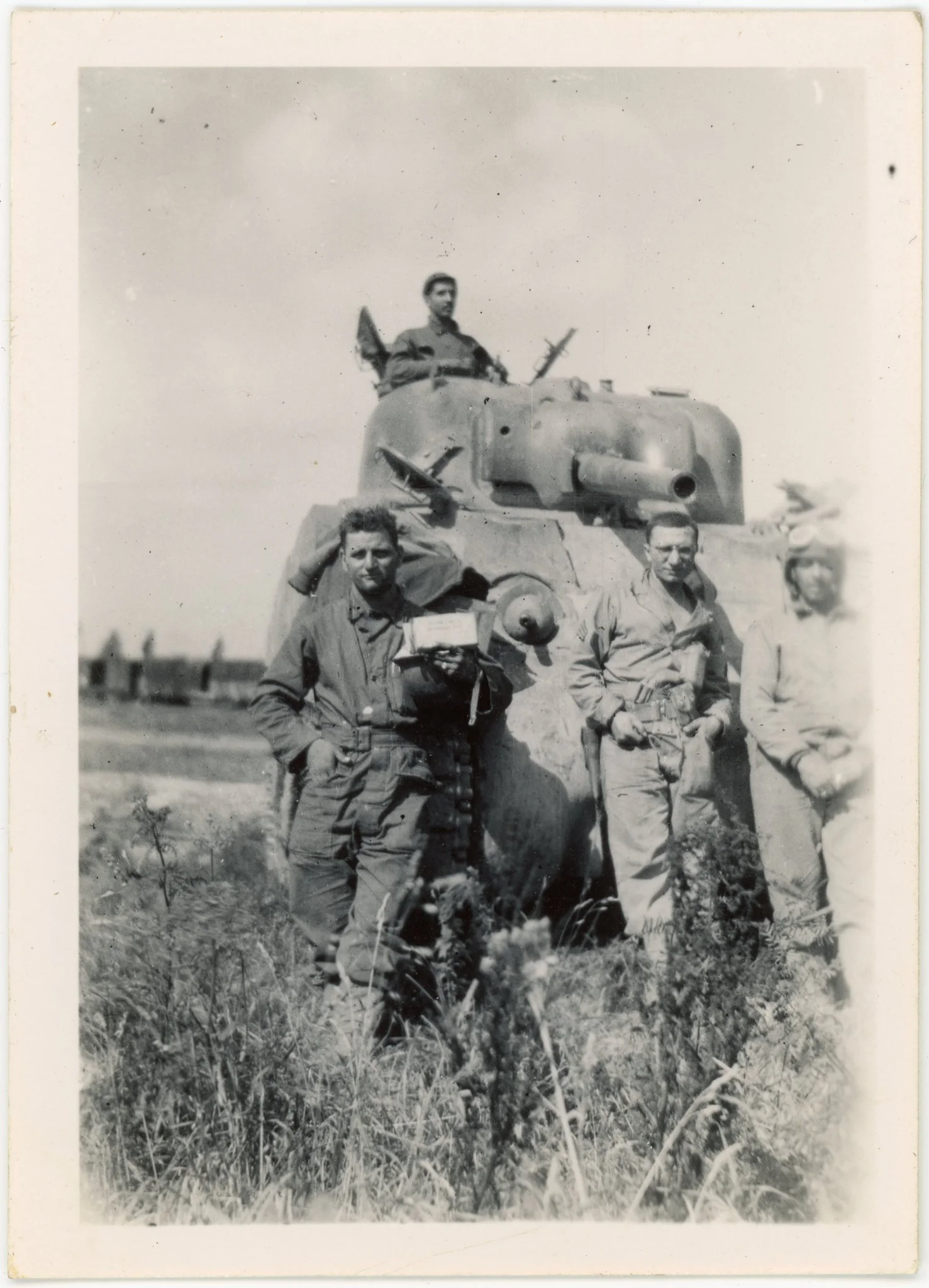
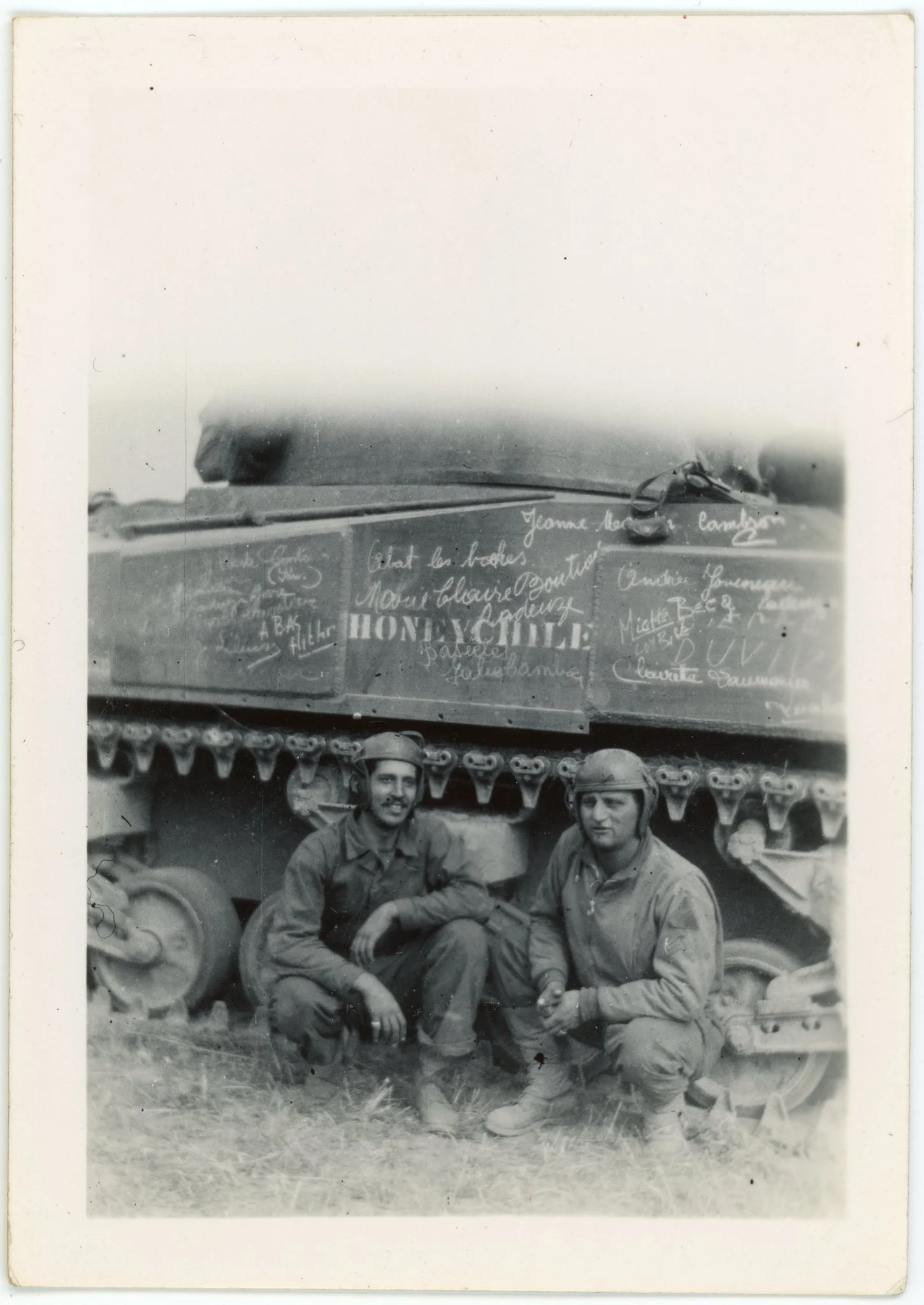
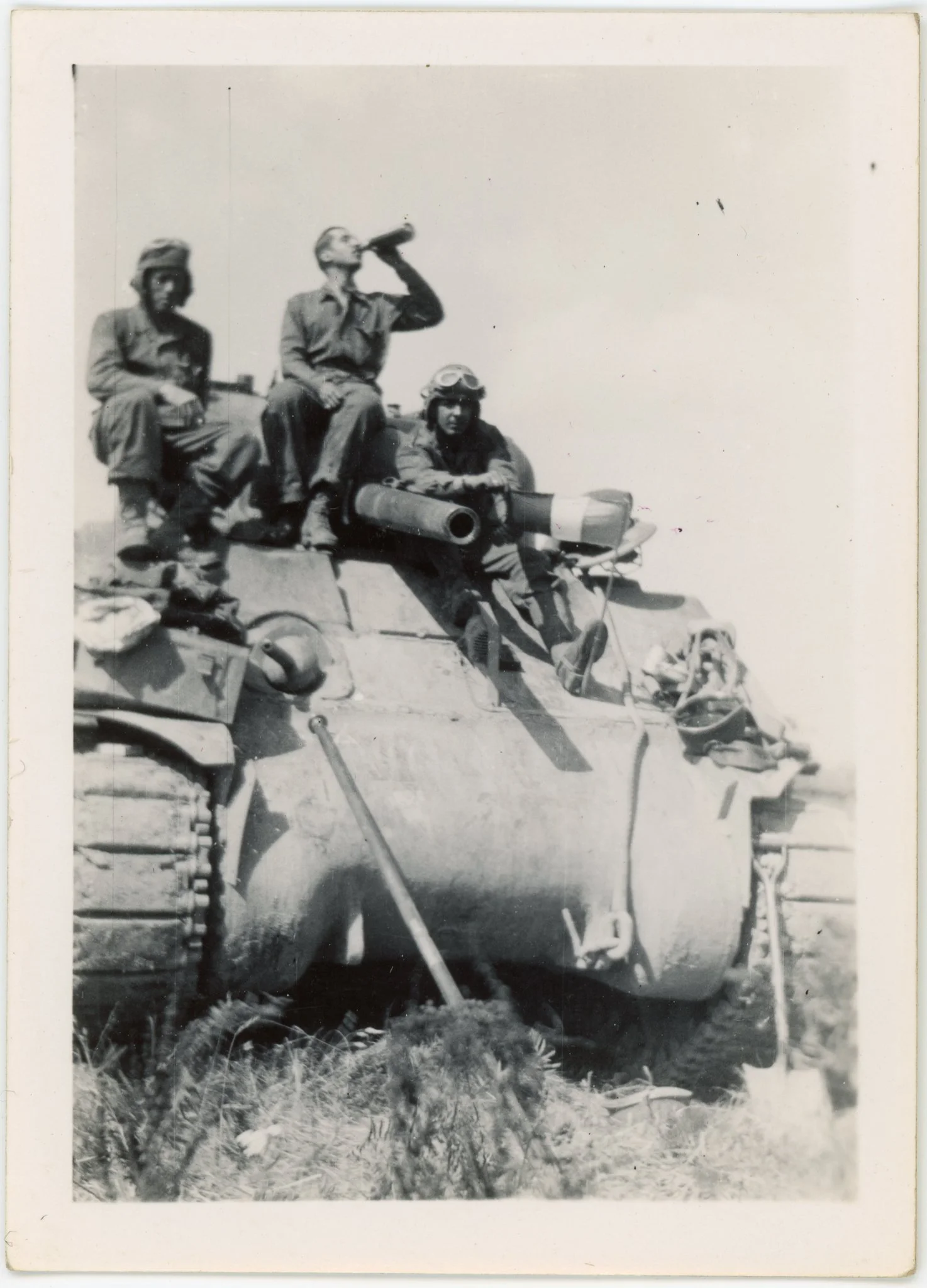
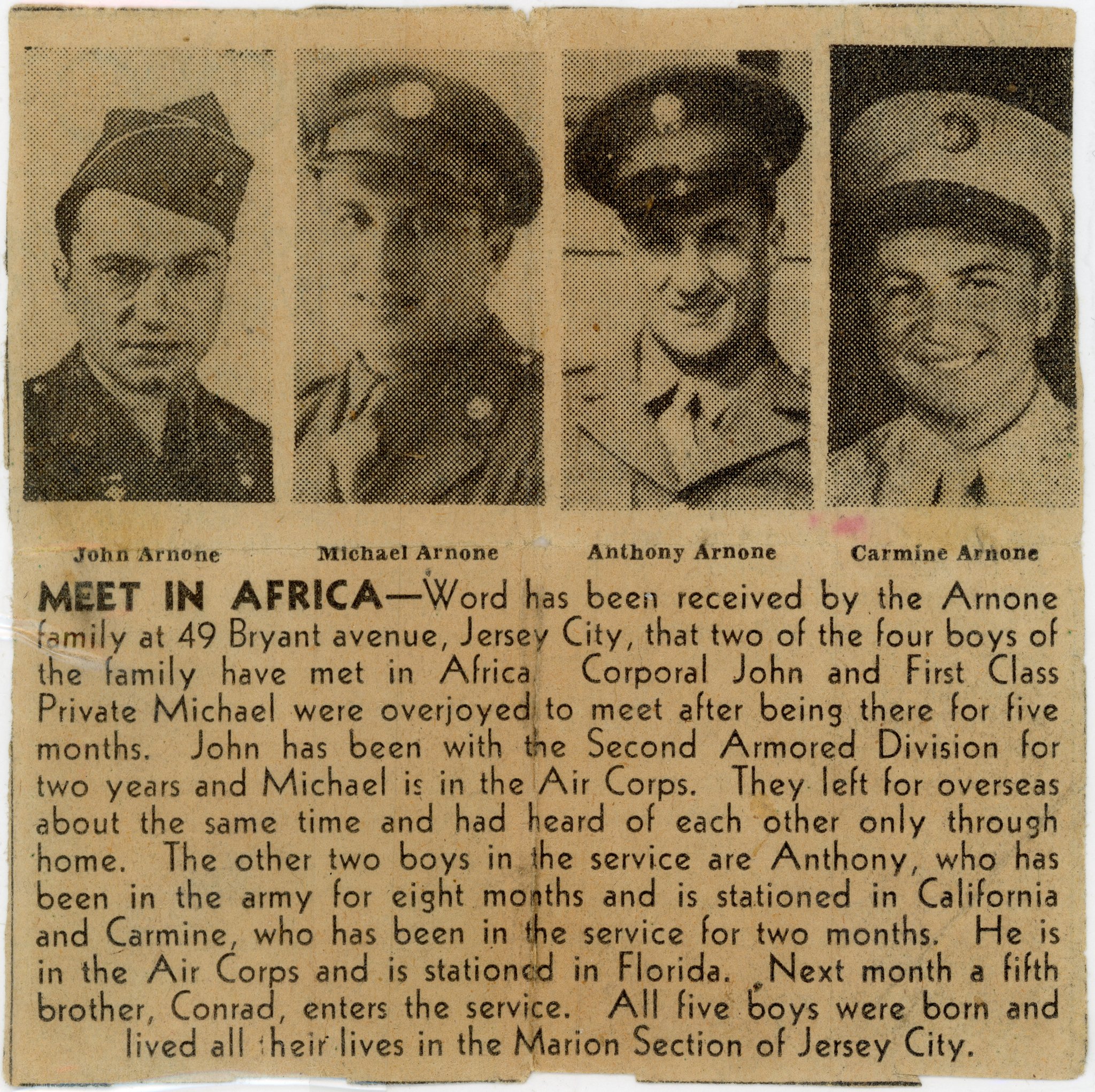
In the summer of 1942, some elements of the 2nd Armored Division received word that they would be heading overseas, reinforcing the badly mauled British 8th Army in North Africa. John’s battalion, however, remained stateside, at least for the moment. That did not last long though, and on December 12, 1942, John’s unit boarded a transport ship and departed for the front, arriving in North Africa after twelve days at sea. From the end of 1942 until the summer of 1943, John and his unit helped guard French and Spanish Morocco while training for amphibious landings. During this time, John also managed to meet up with his brother, Michael, who was stationed nearby with the US Army Air Force.
On July 10, 1943, Operation Husky, the Allied invasion of Sicily, began. The 66th Armored Regiment began their assault on the coastal village of Licata. Over the next week, they continued to thrust northwards, liberating occupied villages and pushing back Axis forces before being recalled to Licata on the 18th. There, all elements of the 2nd Armored Division regrouped before moving westward for an assault on the city of Palermo. The assault began on July 22, with John’s unit acting as the vanguard. Before the close of day, the city was surrendered to the Americans. John remained in Sicily until November of 1943 when his unit sailed for England in preparation for their biggest task thus far.
In England, the 2nd Armored Division was informed that they would take part in the invasion of Normandy, France — D-Day. On June 9, 1944, three days after the initial landings, the division disembarked on Omaha Beach and began heading inland, supporting the left flank of the American drive into Northern France. After ten days of desperate fighting in French hedgerows, the 2nd Armored Division was pulled into reserve.

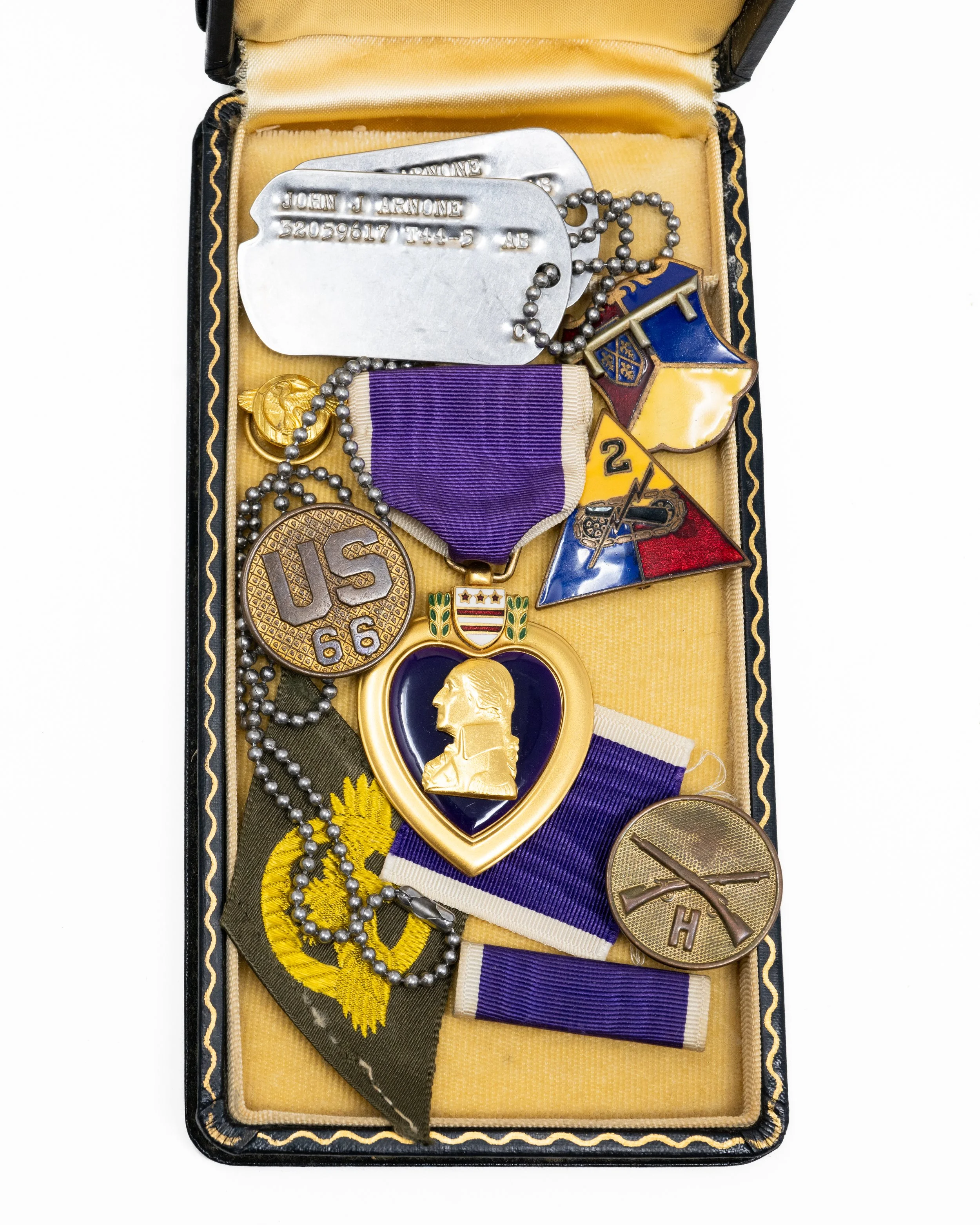
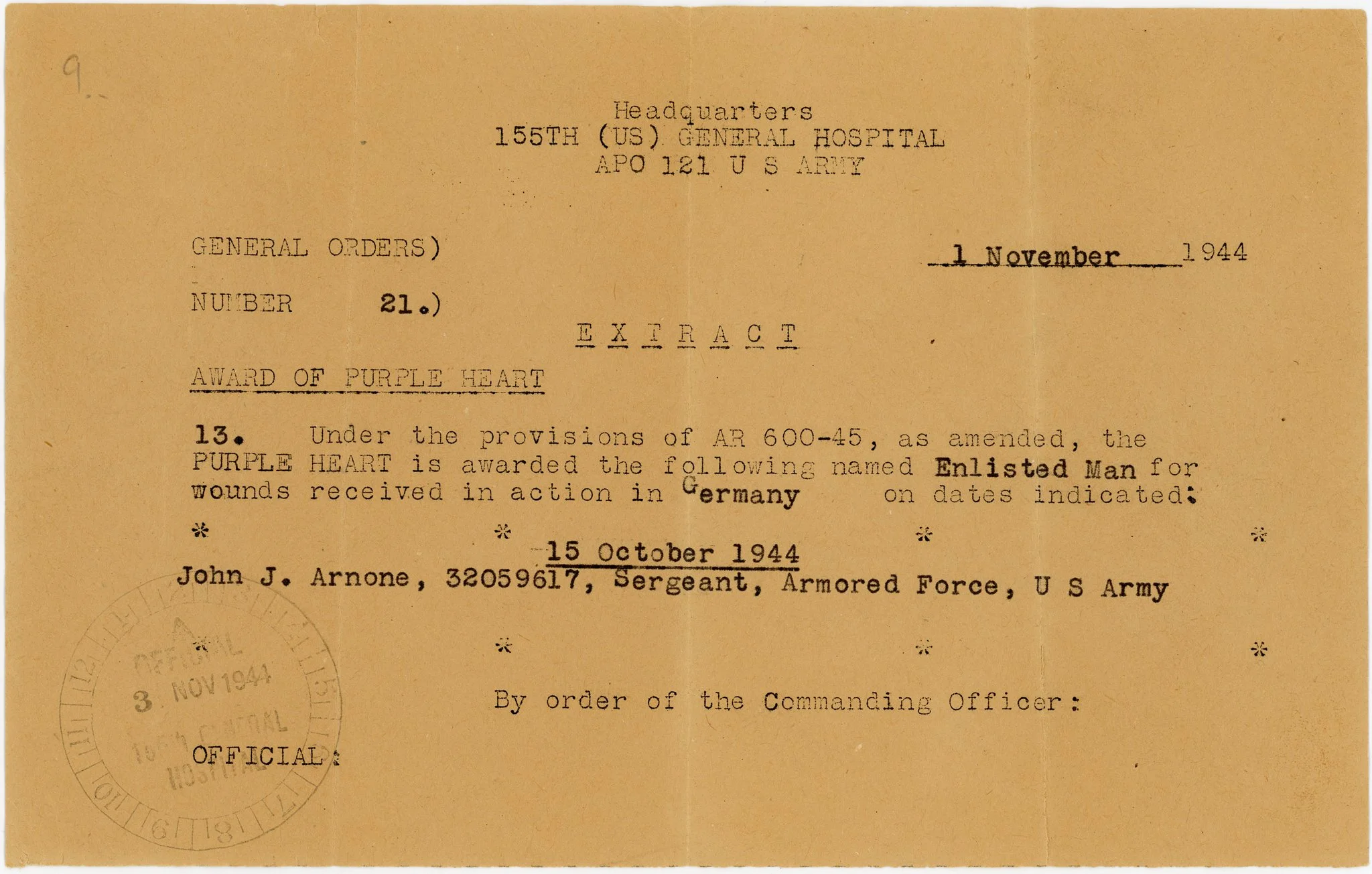
During July and August, John’s unit participated in Operation Cobra, an offensive aiming to break out of the stalemate which had been forming in the weeks since the landings. Finally, the German defenders were forced to retreat in the latter half of August of 1944. John’s unit pursued them into Germany, breaking through the Siegfried Line in early September. The 2nd Armored Division still had one major roadblock however — the city of Aachen. It was during the assault on Aachen that, on October 15, 1944, John was severely wounded by shrapnel from a German 7.5cm gun.
After a period of recovery in England, John returned to his unit in early 1945, just as they were wrapping up operations in the Battle of the Bulge. The spring of 1945 found John participating in the Rhineland Campaign, crossing the Rhine River and racing towards the Elbe River in the final push to destroy the Nazi regime. However, before they could reach it, orders came down to halt the advance and let the Soviet forces take the Elbe. Then, on May 8, the war in Europe ended.
John Arnone, now a Sergeant and a tank commander, returned to America on June 11, 1945, and was honorably discharged five days later. He returned to his job at the American Can Company and went on to serve as an inspector there for the remainder of his career. In December of 1958, he married Ms. Carmela Penniplede and the two soon welcomed a daughter. John Arnone passed away on November 22, 1970 and is buried at Holy Name Cemetery in Jersey City, New Jersey.
The WWII Veterans History Project is deeply grateful to Rose Arnone, John’s daughter, for entrusting us with artifacts from his wartime service.